






BLOG > Publications & Citations > Longitudinal Analysis of Male Fertility Using an Acr-Luc Knock-In Mouse Model
Authors: H. Fukunaga, R. Seino, Y. Matsuya, et al.
Source: MedComm 7, no. 1 (2026): e70568.
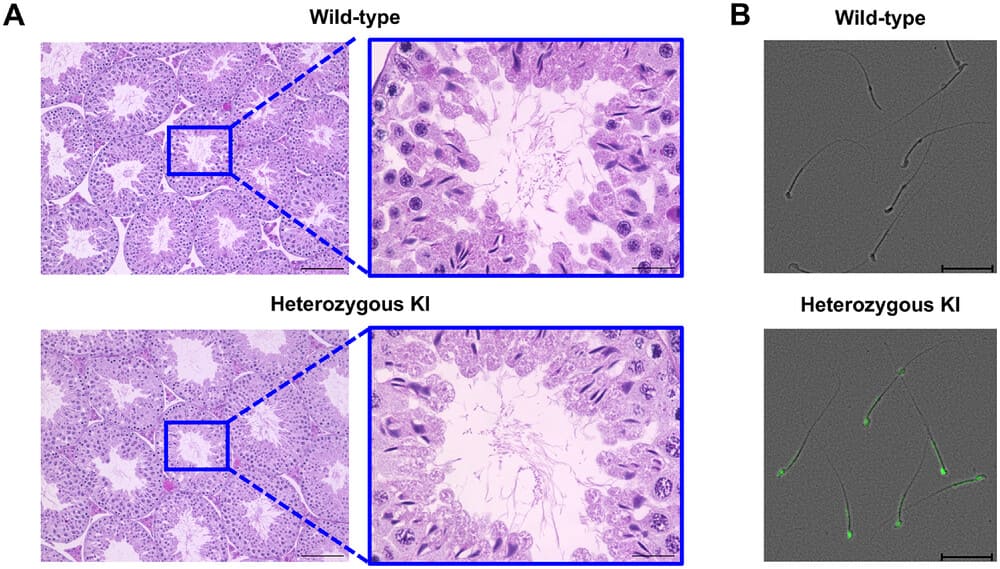
We're delighted to share insights from a recent study entitled "Longitudinal Analysis of Male Fertility Using an Acr-Luc Knock-In Mouse Model: A Preclinical Platform for Reproductive Toxicity Testing" published in MedComm by Hisanori Fukunaga et al:
They successfully established a novel Acr-Luc knock-in mouse model that enables longitudinal and quantitative monitoring of spermatogenesis using bioluminescence imaging (BLI). This platform captures the dose-dependent suppression and subsequent recovery of male reproductive function following toxic exposures, such as radiation, in real time. This approach allows repeated, noninvasive assessments in the same individual, significantly reducing animal usage and variability, thereby upholding the "Reduction" principle of the 3Rs.
Congratulations to all the authors on this excellent article!
Our d-Luciferin potassium salt played a dual role. In vivo, it was administered intravenously to the Acr-Luc mice, enabling longitudinal, real-time tracking of testicular function and its disruption. In vitro, the reagent was used directly with isolated germ cells to confirm a strong linear correlation between luminescence intensity and the actual number of germ cells, thereby validating the system's quantitative readout.
Read the article See D-Luciferin salts
Related publications
Meningococci drive host membrane tubulation to recruit their signaling receptors
Lymphoid gene expression supports neuroprotective microglia function